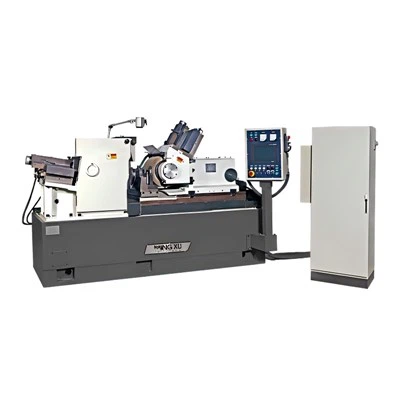
The feed rate of a surface grinding machine is a critical parameter that significantly impacts the efficiency, quality, and cost – effectiveness of the grinding process. As a supplier of surface grinding machines, I am often asked about what the feed rate is and how it affects the overall performance of these machines. In this blog, I will delve into the concept of feed rate, its importance, factors influencing it, and how to optimize it for different applications. Surface Grinding Machine
Understanding the Feed Rate
The feed rate in a surface grinding machine refers to the speed at which the workpiece moves relative to the grinding wheel. It is typically measured in millimeters per minute (mm/min) or inches per minute (in/min). There are two main types of feed rates in surface grinding: longitudinal feed and cross – feed.
The longitudinal feed is the movement of the workpiece along the length of the grinding wheel. This feed is responsible for covering the entire surface of the workpiece in a linear direction. For example, when grinding a long, rectangular block, the longitudinal feed will move the block from one end to the other under the grinding wheel.
The cross – feed, on the other hand, is the movement of the workpiece perpendicular to the longitudinal feed. It is used to gradually reduce the width of the material being ground and to ensure an even surface finish across the width of the workpiece.
Importance of Feed Rate
The feed rate plays a crucial role in determining the quality of the ground surface and the productivity of the grinding process.
Surface Finish
A proper feed rate is essential for achieving a high – quality surface finish. If the feed rate is too high, the grinding wheel may not have enough time to remove material evenly, resulting in a rough surface finish with visible scratches and unevenness. On the other hand, if the feed rate is too low, the grinding wheel may over – grind the surface, leading to excessive heat generation, which can cause thermal damage to the workpiece, such as burns and micro – cracks.
Material Removal Rate
The feed rate directly affects the material removal rate (MRR). A higher feed rate generally leads to a higher MRR, which means more material can be removed in a shorter period. This is beneficial for increasing productivity, especially in mass production. However, as mentioned earlier, an overly high feed rate can compromise the surface quality. Therefore, a balance must be struck between the feed rate and the desired surface finish to optimize the MRR.
Tool Life
The feed rate also has an impact on the life of the grinding wheel. A high feed rate can cause excessive wear on the grinding wheel, as it has to remove more material in a shorter time. This can lead to a shorter tool life and increased costs for wheel replacement. By choosing an appropriate feed rate, the wear on the grinding wheel can be minimized, extending its useful life.
Factors Influencing Feed Rate
Several factors need to be considered when determining the feed rate for a surface grinding machine.
Workpiece Material
Different materials have different hardness and machinability. Harder materials, such as hardened steel, require a lower feed rate to ensure proper material removal and prevent damage to the grinding wheel. Softer materials, like aluminum, can generally tolerate a higher feed rate. For example, when grinding aluminum, a feed rate of 300 – 500 mm/min may be appropriate, while for hardened steel, a feed rate of 50 – 150 mm/min might be more suitable.
Grinding Wheel Characteristics
The type, grit size, and bond of the grinding wheel also influence the feed rate. A grinding wheel with a coarse grit size can generally handle a higher feed rate compared to a fine – grit wheel. This is because the coarse – grit wheel has larger abrasive particles that can remove material more aggressively. The bond of the grinding wheel, which holds the abrasive particles together, also affects the feed rate. A stronger bond can withstand higher feed rates without the abrasive particles being pulled out prematurely.
Machine Capabilities
The power and rigidity of the surface grinding machine play a role in determining the feed rate. A more powerful machine can handle a higher feed rate as it has the capacity to drive the workpiece and the grinding wheel at a faster speed. Similarly, a rigid machine can better withstand the forces generated during the grinding process, allowing for a higher feed rate without causing excessive vibration or chatter.
Desired Surface Finish
As mentioned earlier, the desired surface finish is a key factor in determining the feed rate. If a very smooth surface finish is required, a lower feed rate should be used. For applications where a rougher surface finish is acceptable, a higher feed rate can be employed to increase productivity.
Optimizing Feed Rate for Different Applications
To optimize the feed rate for different applications, the following steps can be taken:
Conduct a Material Analysis
Before starting the grinding process, analyze the workpiece material to determine its hardness, machinability, and other properties. This will help in selecting an appropriate feed rate range.
Select the Right Grinding Wheel
Choose a grinding wheel that is suitable for the workpiece material and the desired surface finish. Consider the grit size, bond type, and wheel diameter. A well – matched grinding wheel can work more efficiently at a given feed rate.
Test and Adjust
Start with a conservative feed rate and gradually increase it while monitoring the surface finish, material removal rate, and tool wear. Make small adjustments based on the results of each test until the optimal feed rate is achieved.
Use Advanced Control Systems
Many modern surface grinding machines are equipped with advanced control systems that can automatically adjust the feed rate based on various parameters, such as the load on the grinding wheel and the surface finish. These systems can help in achieving consistent and optimal feed rates throughout the grinding process.
Conclusion
In conclusion, the feed rate of a surface grinding machine is a complex yet crucial parameter that affects the quality, productivity, and cost – effectiveness of the grinding process. As a surface grinding machine supplier, I understand the importance of providing our customers with the knowledge and tools to optimize the feed rate for their specific applications.
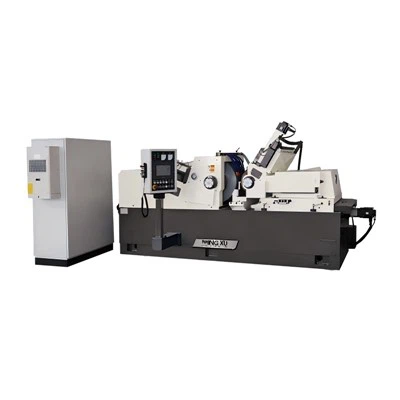
Hydraulic Surface Grinder If you are in the market for a surface grinding machine or need advice on optimizing the feed rate for your grinding operations, I encourage you to reach out to us. Our team of experts is ready to assist you in selecting the right machine and providing guidance on achieving the best results in your grinding processes.
References
- "Modern Grinding Technology" by Malkin, S. and Guo, C.
- "Handbook of Machining with Grinding Wheels" by Inasaki, I.
- "Surface Grinding: Principles and Applications" by Trent, E. M. and Wright, P. K.
Wuxi Mingxu Machinery Equipment Co., Ltd.
As one of the most professional surface grinding machine manufacturers and suppliers in China, we’re featured by quality products and good price. Please rest assured to buy the best surface grinding machine for sale here from our factory. Also, custom service is available.
Address: No. 5-5 Jinke Wealth Plaza, Changjiang North Road, Xinwu District, Wuxi City, Jiangsu Province
E-mail: yingyingmxjd@163.com
WebSite: https://www.mingxu-china.com/
