Hey there! I’m a supplier of xanthate, and I’ve been getting a lot of questions lately about what happens when xanthate reacts with metal sulfides. So, I thought I’d take a few minutes to break it down for you. Xanthate
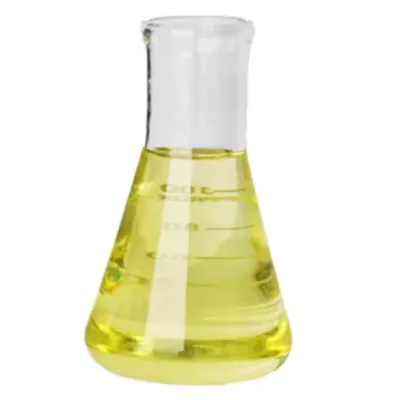
First off, let’s talk a bit about what xanthate is. Xanthates are a class of organic compounds that are widely used in the mining industry, especially in the flotation process. They’re basically salts of xanthic acid, and they’ve got a sulfur – containing functional group that makes them super useful for separating minerals from ores.
Now, onto the main topic: the reactions of xanthate with metal sulfides. Metal sulfides are a group of minerals that contain a metal and sulfur. Some common metal sulfides you might’ve heard of are galena (lead sulfide), sphalerite (zinc sulfide), and chalcopyrite (copper – iron sulfide).
When xanthate comes into contact with metal sulfides, a chemical reaction occurs. The sulfur atoms in the xanthate molecule have a strong affinity for the metal ions in the metal sulfides. This affinity leads to the formation of a metal xanthate complex on the surface of the metal sulfide particles.
Let’s dive a little deeper into the reaction mechanism. It all starts with the adsorption of xanthate ions onto the surface of the metal sulfide. The metal sulfide surface has some reactive sites where the xanthate ions can stick. Once adsorbed, a chemical reaction takes place. The xanthate donates an electron to the metal in the metal sulfide, and a metal xanthate compound is formed. This compound is quite hydrophobic, which means it doesn’t like water.
This hydrophobic property is what makes xanthates so important in the flotation process. In flotation, the goal is to separate valuable minerals from the gangue (the unwanted stuff in the ore). When we add xanthate to a slurry of ore and water, the xanthate reacts with the metal sulfide minerals as described above. The metal – xanthate complexes on the surface of the metal sulfide particles make them hydrophobic. Then, when we introduce air bubbles into the slurry, these hydrophobic metal sulfide particles attach to the air bubbles and float to the surface. We can then skim off the froth on the surface, which contains the valuable metal sulfide minerals.
Now, different metal sulfides react with xanthate at different rates and under different conditions. For example, galena reacts very quickly with xanthate. It has a high reactivity, and the reaction can occur even at relatively low xanthate concentrations. This is because lead in galena has a strong tendency to form a stable metal – xanthate complex.
On the other hand, sphalerite is a bit more stubborn. It doesn’t react as readily with xanthate as galena does. To get a good reaction with sphalerite, we usually need to add some activators. Activators are substances that increase the reactivity of the metal sulfide surface. For sphalerite, copper sulfate is a commonly used activator. When we add copper sulfate to the slurry containing sphalerite and xanthate, the copper ions in the copper sulfate replace some of the zinc ions on the sphalerite surface. This creates a more reactive surface, and the xanthate can then react more easily with the modified sphalerite surface.
Chalcopyrite is another interesting case. It’s a complex copper – iron sulfide, and its reaction with xanthate is influenced by many factors. The presence of iron in chalcopyrite can cause some complications. Sometimes, iron can react with the xanthate and form iron – xanthate complexes, which might not be as effective for flotation. To deal with this, we often use depressants. Depressants are substances that prevent the reaction of certain minerals with xanthate. For chalcopyrite, sodium cyanide or lime can be used as depressants to control the reaction and improve the selectivity of the flotation process.
The pH of the slurry also plays a crucial role in the reaction of xanthate with metal sulfides. Different metal sulfides have different optimal pH ranges for the reaction with xanthate. For example, galena can react well with xanthate over a relatively wide pH range, but sphalerite usually requires a more specific pH range, often slightly acidic to neutral conditions, for an efficient reaction.
Temperature is another factor. Generally, an increase in temperature can speed up the reaction rate between xanthate and metal sulfides. However, we need to be careful because too high a temperature can also cause some side reactions or decomposition of the xanthate.
As a xanthate supplier, I know how important it is to understand these reactions. Different mining operations have different requirements based on the type of metal sulfides they’re dealing with. That’s why we offer a variety of xanthate products. We’ve got different chain – length xanthates, and each one has its own set of properties and reactivity characteristics. For instance, short – chain xanthates are more soluble in water and can react quickly with metal sulfides, but they might not form as stable complexes as long – chain xanthates. Long – chain xanthates are less soluble but can form more hydrophobic and stable complexes on the metal sulfide surface.
If you’re in the mining industry and are looking for high – quality xanthate for your flotation process, I’d love to talk to you. Understanding the reactions of xanthate with metal sulfides is key to optimizing your flotation operations and getting the best results. Whether you’re dealing with galena, sphalerite, chalcopyrite, or other metal sulfides, we can help you choose the right xanthate product for your specific needs.
Contact us to start a conversation about your xanthate requirements. We’re here to provide you with the best solutions and support to make your mining operations more efficient and profitable.
Xanthate References:
- "Flotation: A Century of Innovation" edited by R.P. King
- "Mineral Processing Technology" by B.A. Wills and T. Napier – Munn
Bitop Bihope Qingdao Mining Co., Ltd
Bitop Bihope Qingdao Mining Co., Ltd. is one of the most professional xanthate manufacturers and suppliers in China, featured by quality products and low price. Please rest assured to buy discount xanthate in stock here and get quotation from our factory. Customized orders are welcome.
Address: Room 410, 4th Floor, Shengquan Business Building, No. 263 Yitong Road, Huangdao District, Qingdao City, Shandong Province, China
E-mail: btbhmining@163.com
WebSite: https://www.btbhmining.com/
