As a supplier of sintering and porcelain furnaces, I often encounter inquiries from customers interested in using our equipment for sintering 3D-printed parts. This topic has gained significant attention in recent years due to the rapid growth of 3D printing technology and its diverse applications across various industries. In this blog, I will explore whether a sintering and porcelain furnace can be effectively used for sintering 3D-printed parts, discussing the technical aspects, advantages, challenges, and considerations. Sintering and Porcelain Furnace

Technical Compatibility
To understand whether a sintering and porcelain furnace can be used for 3D-printed parts, it is essential to first understand the sintering process. Sintering is a heat treatment process that involves heating a powder compact to a temperature below its melting point, causing the particles to bond together and form a solid mass. This process is crucial for improving the strength, density, and other mechanical properties of the material.
3D printing, also known as additive manufacturing, is a process of creating three-dimensional objects by depositing material layer by layer. There are several types of 3D printing technologies, including fused deposition modeling (FDM), stereolithography (SLA), selective laser sintering (SLS), and binder jetting. Each technology uses different materials and processes, which can affect the suitability of a sintering and porcelain furnace for post-processing.
In general, a sintering and porcelain furnace can be used for sintering 3D-printed parts made from ceramic, metal, or composite materials. However, the specific requirements of the sintering process, such as temperature, atmosphere, and heating rate, may vary depending on the material and the 3D printing technology used. For example, ceramic materials typically require high temperatures (up to 1600°C) and a controlled atmosphere to prevent oxidation and ensure proper densification. Metal materials, on the other hand, may require lower temperatures and a reducing atmosphere to prevent oxidation and promote sintering.
Advantages of Using a Sintering and Porcelain Furnace for 3D-Printed Parts
There are several advantages to using a sintering and porcelain furnace for sintering 3D-printed parts:
- Improved Mechanical Properties: Sintering can significantly improve the strength, density, and hardness of 3D-printed parts, making them more suitable for applications that require high performance and durability.
- Enhanced Dimensional Accuracy: Sintering can help to reduce the shrinkage and warping of 3D-printed parts, resulting in better dimensional accuracy and surface finish.
- Material Compatibility: Sintering and porcelain furnaces can be used with a wide range of materials, including ceramics, metals, and composites, providing flexibility in material selection for 3D printing applications.
- Cost-Effective: Sintering can be a cost-effective way to post-process 3D-printed parts, especially for large-scale production, as it eliminates the need for additional machining or finishing operations.
- Environmentally Friendly: Sintering is a relatively clean and energy-efficient process, which can help to reduce the environmental impact of 3D printing.
Challenges and Considerations
While there are many advantages to using a sintering and porcelain furnace for sintering 3D-printed parts, there are also some challenges and considerations that need to be addressed:
- Material Selection: The choice of material for 3D printing and sintering is critical, as different materials have different sintering requirements and properties. It is important to select a material that is compatible with both the 3D printing technology and the sintering process.
- Process Optimization: The sintering process needs to be optimized for each specific material and 3D printing technology to ensure proper densification and mechanical properties. This may require experimentation and adjustment of the sintering parameters, such as temperature, atmosphere, and heating rate.
- Part Geometry: The geometry of the 3D-printed part can also affect the sintering process. Complex geometries or parts with thin walls may require special support structures or sintering techniques to prevent distortion or cracking.
- Equipment Selection: The selection of the sintering and porcelain furnace is also important, as different furnaces have different capabilities and limitations. It is important to choose a furnace that can meet the specific requirements of the sintering process, such as temperature range, atmosphere control, and heating rate.
- Safety Considerations: Sintering involves high temperatures and potentially hazardous materials, such as ceramics and metals. It is important to follow proper safety procedures and guidelines when operating a sintering and porcelain furnace to prevent accidents and injuries.
Conclusion
In conclusion, a sintering and porcelain furnace can be effectively used for sintering 3D-printed parts made from ceramic, metal, or composite materials. However, the specific requirements of the sintering process may vary depending on the material and the 3D printing technology used. It is important to carefully consider the material selection, process optimization, part geometry, equipment selection, and safety considerations when using a sintering and porcelain furnace for 3D-printed parts.
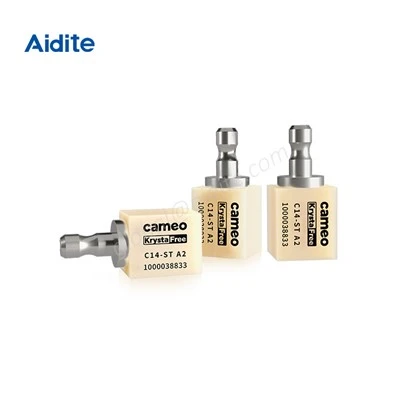
Glass Ceramic As a supplier of sintering and porcelain furnaces, we have the expertise and experience to help our customers choose the right equipment and optimize the sintering process for their specific applications. If you are interested in learning more about our products and services, or if you have any questions or concerns about using a sintering and porcelain furnace for 3D-printed parts, please do not hesitate to contact us. We would be happy to discuss your needs and provide you with a customized solution.
References
- German, R. M. (1996). Sintering theory and practice. John Wiley & Sons.
- Maskery, I., Crawford, R. J., & Martovetsky, N. (2016). Post-processing techniques to improve the properties of 3D printed polymers: a review. Journal of Manufacturing Processes, 29, 66-79.
- Schantz, G. K., & Watschke, J. (2007). Materials and processes for ceramic 3D printing. Advanced Materials Research, 26-28, 561-564.
- Wauthle, R., Colpaert, J., Van Humbeeck, J., & Kruth, J.-P. (2015). Post-processing of 3D printed high-performance polymers. CIRP Annals – Manufacturing Technology, 64(1), 265-268.
Aidite (Qinhuangdao) Technology Co., Ltd.
Aidite (Qinhuangdao) Technology Co., Ltd. is one of the most professional sintering and porcelain furnace manufacturers and suppliers in China, featured by quality products and good service. Please rest assured to buy bulk sintering and porcelain furnace at competitive price from our factory. Also, quotation is available.
Address: No.9 Dushan Road, Economic and Technological Development Zone, Qinhuangdao, Hebei Prov., China
E-mail: global@aidite.com
WebSite: https://www.aiditeglobal.com/
