Alright, let’s cut to the chase—when people ask me if a water tank tricycle works for car washing, I don’t just say “yes” or “no.” I say, “Do you want something that’s cheap, flexible, and actually pays for itself?” As a guy who’s been selling these tank trikes for 7 years, I’ve seen everything: small shop owners turning $500 a week into $2k, college students running side hustles around campus, even local councils doing community clean-ups with the same unit. So let’s break this down like we’re grabbing a coffee (no fancy jargon, promise). Water Tank Tricycle

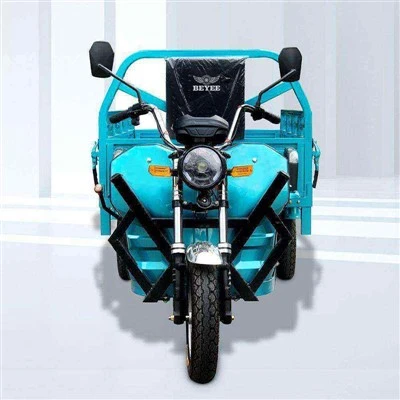
First, let’s get the basics out of the way. A standard water tank tricycle I sell isn’t just a bike with a plastic bucket strapped to the back. It’s a 3-wheeled, gas-powered (or even electric, for the eco-conscious folks) rig with a food-grade HDPE tank that holds 120 to 300 liters of water. Wait—120 liters? That’s enough to wash 10 to 15 average cars, right? A typical full car wash uses 8 to 12 liters of water for a basic wash, plus a little extra for rinsing. I’ve never had a customer complain they ran out mid-job. But here’s the kicker: these things are tiny. You can fit them through a narrow alley, a residential driveway, or a tight parking spot at a mall where a full-size truck would get stuck. No need to rent a pricey brick-and-mortar shop or haul a water truck around. That’s the biggest win for small operators—low overhead, maximum flexibility.
But let’s address the elephant in the room: “Is it powerful enough to actually get cars clean?” Yeah, but not in the “pressure washer for a semi” way. My clients swap out the standard hose nozzle for a 150-200 PSI trigger nozzle that’s light enough for one person to hold, and you can adjust the pressure—soft for delicate paint jobs, firm for road grime on tires. I worked with a guy in Bangkok last year who washes taxis around rush hour—he says the nozzle gets rid of bird droppings and brake dust just fine, and he adds a tiny bit of eco-friendly car shampoo to the mix so he’s not leaving streaks. I’ve heard the same from a mom in Manila who washes her neighbors’ cars on weekends—she’s not using industrial gear, but it works for her side hustle. The only time it struggles is if you try to pressure wash a decades-old truck with caked-on mud, and even then, a quick scrub brush fixes it. No major issues there.
Now, let’s talk about the day-to-day stuff that actually matters, not just specs. Fuel or electric? Gas models get 40 km per liter, which is wild—you can wash cars in your neighborhood all day and only burn half a liter of gas. Electric ones are even better, no emissions, just plug them in at night, perfect for areas with strict noise laws. The tank is removable too—if you’re in a super dry area, you can top it up at a community tap in 5 minutes, no big hose hookup. And storage? You can leave it in a small garage or even your backyard, no need for a big lot. One of my first customers was a college student in Nairobi—he kept his trike in his dorm’s bike shed and washed cars on weekends. No hassle, no extra costs.
Wait, but what about scaling it up? I get that—some people start small and want to grow. The good news is these trikes are easy to modify. You can add a second tank for extra water, a small generator for a bigger pressure washer, even a foldable awning so you can wash cars in the sun or light rain. Last year, a client in Jakarta added a foldable shelf to hold car cleaning supplies, a change of clothes, and even a mini cooler for his breaks—turned it into a mobile car wash setup that he takes to office parking lots after work. He now has two trikes and hires a part-time helper. It’s not just a toy, it’s a foundation.
Let’s be real, though—this isn’t for everyone. If you’re looking to wash 100+ cars a day, a full-size water truck or a fixed bay is probably better. But if you want to start low, test the market, and not drop $10k on equipment, this is your move. Let’s do the math quick: my trikes cost a fraction of a full truck, like 1/5 to 1/10 the price. A basic car wash is $5 to $8 in most parts of the world, and you can wash 5 to 8 cars a day, 5 days a week. That’s $125 to $320 a week, and you’re only paying for gas/shampoo, which is like $20 a week. You pay off the trike in 2 to 4 months, then it’s straight profit. I’ve had customers who turned their trike side hustle into a full-time gig within 6 months.
Here’s a little story that sticks with me: a guy in Accra, Ghana, bought his first trike from me in 2021. He was selling phone cases on the street, barely making enough to pay rent. He used his last $800 to get the trike, some cleaning supplies, and printed flyers that said “Mobile Car Wash—Cash only, done at your door.” He started washing 2 cars a day, then 4, then he told his cousin about it, and now they have two trikes and wash cars for local businesses on the regular. Last time I checked, he was saving for a shop. That’s the stuff that makes me love this job—these trikes aren’t just equipment, they’re a way for people to build something without a huge investment.
Now, let’s cover the little details that people don’t think about at first. Maintenance? It’s super easy. The tank is plastic, so it doesn’t rust, and the engine is a basic 1-cylinder, same as a small lawnmower. You change the oil every 50 hours, check the hose for leaks, and that’s it. No complicated parts, no mechanics bills. What about the weather? We sell trikes to people in places with hot sun, heavy rain, even light snow in some mountain areas. In snow, you just get a warmer nozzle and wear gloves—no big deal. The only time I’d say it’s tricky is if you’re in an area with super steep hills, but even then, most gas trikes have enough power to handle gentle slopes.
Wait, I should also talk about sustainability, because that’s a big one right now. A lot of my customers are into that—they say they’re not just washing cars, they’re cutting down on water waste because they only use what’s in the tank, not a big hose that runs 50 liters a minute. The food-grade tank means no weird chemicals leaching into the water runoff, and most people use eco-friendly shampoos anyway. I had a client in Costa Rica who used to wash cars with a big hose at a fixed spot, but he switched to the trike so he could move around and not dump gray water into a local stream. He told me his customers loved that he was eco-friendly, so he raised his prices a little and got more work. That’s a win-win.
Let’s be clear—this isn’t some magic solution, and it’s not going to work for every single car washing model. But for small operators, side hustlers, or local teams that want to be flexible, it’s perfect. The biggest mistake I see new owners make is not advertising enough—putting a big sign on the trike, handing out flyers in residential areas, posting on local Facebook groups. People love the convenience of not having to drive their car to a wash shop, especially if they have kids or a busy schedule.
If you’re reading this and thinking, “Hey, that sounds like something I could do,” hit me up. I don’t do fancy sales pitches, I answer questions honestly. I’ve helped people figure out if a trike is right for them, I can point you to good cleaning supplies, and I even offer a quick training video on how to use the pressure nozzle and maintain the engine. No pressure, no hidden fees—just real advice from someone who’s been in this for years.
Look, I started selling water tank tricycles because I saw how much people struggled to start small businesses without big loans. This isn’t that. You don’t need a business degree, you don’t need a lot of capital, you just need a trike, a little cleaning stuff, and the willingness to put in the work. And if car washing isn’t your thing? The trikes work for mobile coffee, delivering snacks, even moving small loads around—they’re super versatile. But for car washing? They work way better than most people think, as long as you go into it with realistic expectations.
So that’s the straight scoop. No overhyping, no vague claims, just what I’ve seen over 7 years. If you’ve got questions, or you want to get pricing or specs, reach out. I’m here to help.
Water Tank Tricycle References:
- International Water Management Institute. (2020). Mobile Water-Based Services for Small-Scale Livelihoods. IWMI Working Paper Series.
- Automotive Aftermarket Industry Association. (2022). Small-Scale Mobile Car Wash Operations: Market and Feasibility Analysis. AAIA Industry Report.
- Global EV Outlook. (2023). Two-Wheel and Three-Wheel Electric Vehicle Market Trends. International Energy Agency.
- Small Business Administration. (2021). Low-Capital Side Hustles for Urban and Peri-Urban Areas. SBA Small Business Research Brief.
Chongqing Beiyi Vehicle Co., Ltd.
With abundant experience, we are one of the most professional water tank tricycle suppliers in China. We warmly welcome you to buy durable water tank tricycle at competitive price from our factory. If you have any enquiry about pricelist, please feel free to email us.
Address: Area B, Luohuang Industrial Park, Jiangjin District, Chongqing.
E-mail: dayang@besttricycle.com
WebSite: https://www.beyeemoto.com/
