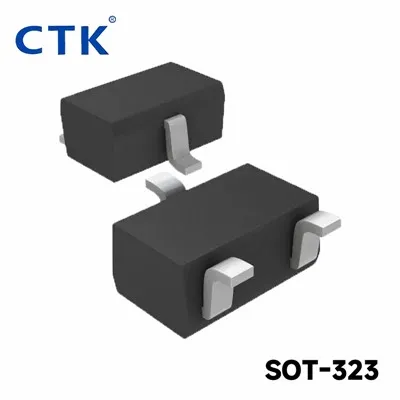
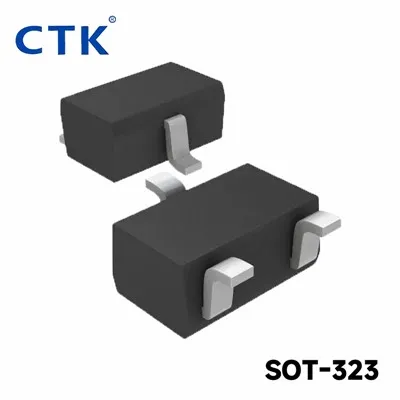
Hey there! I’m a supplier of Middle Voltage MOSFETs, and today I wanna chat about the noise characteristics of these little powerhouses. Middle Voltage MOSFETs are used in a ton of applications, from power supplies to motor control, and understanding their noise behavior is super important. Middle Voltage MOSFETs
What is Noise in Middle Voltage MOSFETs?
First off, let’s talk about what we mean by noise. In the world of electronics, noise is basically any unwanted electrical signal that can interfere with the normal operation of a device. For Middle Voltage MOSFETs, noise can come from a few different sources.
One of the main sources of noise is thermal noise. This is caused by the random motion of electrons in the MOSFET’s channel. As the temperature goes up, the electrons move around more randomly, and this creates a small amount of electrical noise. It’s like when you shake a box of marbles – the more you shake it, the more random the movement of the marbles becomes.
Another source of noise is flicker noise, also known as 1/f noise. This type of noise is more prominent at low frequencies and is related to the surface properties of the MOSFET. It’s thought to be caused by the trapping and detrapping of electrons at the interface between the semiconductor and the gate oxide. Flicker noise can be a real pain in the neck, especially in applications where low-frequency signals are important.
Shot noise is yet another type of noise that can affect Middle Voltage MOSFETs. This noise is caused by the discrete nature of electric charge. When electrons flow through the MOSFET, they do so in discrete packets, and this can create small fluctuations in the current. Shot noise is more noticeable at higher currents and can be a significant factor in high-power applications.
Why Noise Matters
You might be wondering why we even care about noise in Middle Voltage MOSFETs. Well, noise can have a big impact on the performance of a circuit. For example, in a power supply, noise can cause voltage fluctuations, which can lead to instability and reduced efficiency. In a motor control application, noise can cause the motor to vibrate or make unwanted noises.
Noise can also affect the accuracy of measurement circuits. If you’re trying to measure a small signal, the noise in the MOSFET can swamp the signal, making it difficult to get an accurate reading. This is especially important in applications like medical devices or scientific instruments, where precision is key.
Measuring Noise in Middle Voltage MOSFETs
So, how do we measure the noise in Middle Voltage MOSFETs? There are a few different methods, but one of the most common is to use a spectrum analyzer. A spectrum analyzer can measure the noise power at different frequencies, allowing us to see the noise characteristics of the MOSFET.
Another method is to use a noise figure meter. This device measures the noise figure of the MOSFET, which is a measure of how much the MOSFET adds to the noise of a signal. A lower noise figure means that the MOSFET is adding less noise to the signal, which is generally a good thing.
Controlling Noise in Middle Voltage MOSFETs
Now that we know what noise is and why it matters, let’s talk about how we can control it. There are a few different strategies that we can use to reduce the noise in Middle Voltage MOSFETs.
One strategy is to choose the right MOSFET for the application. Different MOSFETs have different noise characteristics, so it’s important to select a MOSFET that has low noise for the specific application. For example, if you’re working on a low-frequency application, you might want to choose a MOSFET with low flicker noise.
Another strategy is to use proper circuit design techniques. For example, using a bypass capacitor can help to reduce the noise in the power supply. A bypass capacitor acts as a reservoir of charge, which can smooth out the voltage fluctuations caused by the noise.
We can also use shielding to reduce the noise. Shielding can help to block out external electromagnetic interference, which can reduce the noise in the MOSFET. This is especially important in applications where the MOSFET is exposed to a lot of electromagnetic noise, such as in a high-power industrial environment.
Our Middle Voltage MOSFETs and Noise
As a supplier of Middle Voltage MOSFETs, we take noise seriously. We’ve spent a lot of time and effort researching and developing our MOSFETs to minimize noise. Our MOSFETs are designed with low noise in mind, and we use advanced manufacturing techniques to ensure that they have consistent noise characteristics.
We also offer a range of MOSFETs with different noise profiles to meet the needs of different applications. Whether you’re working on a low-noise audio amplifier or a high-power motor control circuit, we have a MOSFET that’s right for you.
Wrapping Up
In conclusion, the noise characteristics of Middle Voltage MOSFETs are an important factor to consider in many applications. Understanding the different types of noise, why it matters, and how to measure and control it can help you to design better circuits and get the most out of your MOSFETs.
DIODE If you’re interested in learning more about our Middle Voltage MOSFETs or have any questions about noise characteristics, feel free to reach out to us. We’d love to have a chat and see how we can help you with your next project.
References
- "MOSFET Physics and Operation" by B. J. Baliga
- "Noise in Electronic Devices and Systems" by Van der Ziel
Tongke Electronic Co., Ltd
Tongke Electronic Co., Ltd. is one of the most experienced mid & high-mosfets manufacturers and suppliers in China, featured by quality products and low price. Please rest assured to wholesale advanced mid & high-mosfets made in China here from our factory. Contact us for pricelist.
Address: No.3,Chayuan Rd, Street 3, AilingKan, Dalingshan, Dongguan, Guangdong, China.
E-mail: jack@ctk-elec.com
WebSite: https://www.ctkchip.com/
