If you’ve ever walked a factory floor where flexible fabric seals, inflatable rafts, or custom vinyl components are being put together, you’ve almost certainly seen a head foot operated HF welding machine at work. These machines are the workhorses of small to medium-sized fabrication shops, valued for their compact design, no need for external gas supplies, and ability to fuse thermoplastic materials without messy adhesives. For years, their primary reputation rested on welding polyvinyl chloride (PVC), polyurethane (PU), and other common thermoplastics that readily absorb high-frequency electromagnetic energy. But lately, I’ve gotten more and more questions from shop owners and fabricators: “Can this type of HF welding machine handle stainless steel?” As a supplier of these machines, this question is one I take seriously—it’s not just a yes or no answer, it’s about understanding how the technology works, where its limits lie, and what that means for the people relying on it to meet their production goals. Head Foot Operated HF Welding Machine
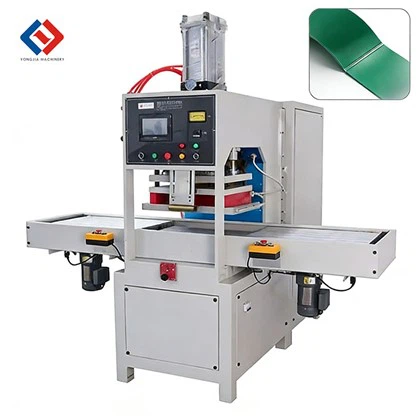
First, let’s break down exactly what a head foot operated HF welding machine is, and how it does its job. Unlike large industrial HF welders that are mounted to production lines or require dedicated floor space, these machines are designed to be operated by one person standing or seated at a compact workbench. The “head” refers to the upper, movable arm that holds the welding electrode, and the “foot” is the pedal the operator presses to lower the head, activate the high-frequency power, and hold the materials in place during the weld. This design is perfect for small-batch jobs, prototype work, or shops that don’t have space for larger equipment. Internally, these machines generate high-frequency alternating current (usually 27.12 MHz, a frequency allocated by regulatory bodies for industrial and commercial use) that creates heat through molecular agitation in the material being welded. For thermoplastics, that means the molecules at the joint vibrate, heat up, and fuse together permanently when pressure is applied—no external heat source is needed, and there’s no risk of warping from localized overheating.
Now, let’s talk about stainless steel. When people ask if an HF machine can weld stainless steel, what they’re really asking is if the same technology that works on PVC can be adapted to a metal that’s typically welded with arc processes like TIG or MIG. The short answer is: standard head foot operated HF welding machines are not designed to weld stainless steel directly. But that’s not the end of the story—there are two key ways to work around this, and both rely on understanding the core principles of how HF energy interacts with different materials.
The first, and most common, is using stainless steel as a component of a multi-layer joint that’s actually welding a thermoplastic. A perfect example is an inflatable boat or pool liner that has a stainless steel fitting attached to the edge. The fitting is metal, but the rest of the liner is PVC or PU. In this case, you can’t weld the metal directly to the thermoplastic with HF energy—those two materials have vastly different molecular structures, so they don’t fuse. But what you can do is create a custom joint: apply a thin layer of compatible thermoplastic to the stainless steel fitting, then run the HF machine to weld that thermoplastic layer to the main liner material. I’ve worked with dozens of customers who do this for marine applications, agricultural water tanks, and medical devices where metal fittings need to be integrated into thermoplastic structures. The key here is that the HF machine is never welding the stainless steel—it’s welding the thermoplastic that’s bonded to the metal. The head foot operated design is ideal for this type of work because it lets operators easily align small metal fittings with the thin thermoplastic sheeting, and the consistent pressure from the foot pedal ensures a strong, leak-free joint.
The second scenario involves modifying a head foot operated HF machine to work with stainless steel, but this is a more specialized application and requires careful consideration of the machine’s capabilities. To weld stainless steel directly with HF energy, you’d need to take advantage of a different principle: induction heating. Induction heating uses high-frequency energy to create eddy currents in conductive materials like stainless steel, which generate heat as the current encounters resistance. Standard head foot operated HF welding machines aren’t built for induction heating—they’re calibrated for dielectric heating, the process that works on thermoplastics. That said, with the right modifications, some of these machines can be adapted. The modification usually involves changing the resonant circuit of the machine to match the frequency range needed for induction heating (usually between 100 kHz and 10 MHz, different from the 27 MHz used for dielectric welding) and swapping out the standard welding electrodes for induction coils that can be shaped to fit the joint. It’s important to note that this isn’t a simple “plug and play” conversion. A lot of our customers ask if we can sell them a head foot operated machine and just turn it into an induction welder, and the answer is that it’s possible, but only if the machine’s power output is sufficient, and the operator is trained on the new process. For thin stainless steel (under 1mm thick), this modification works well for small parts like metal gaskets, electronic components, or custom jewelry. For thicker stainless steel, the power output of most compact head foot operated machines isn’t enough to generate the heat needed to melt or fuse the metal.
I’ve seen a lot of confusion on factory floors about this, mostly because of marketing language that sometimes oversimplifies what HF technology can do. A few years back, a customer came to us frustrated because they bought a used head foot operated HF machine from a supplier that claimed it could weld stainless steel. They tried to weld two pieces of 0.8mm stainless steel together, and all they got was discolored, warped metal with no permanent joint. When they brought it to our service team to look at, it was clear the machine had been misconfigured for induction heating, and the operator had been applying too much pressure for the new process, leading to the warping. We were able to walk them through the correct steps for using a modified induction coil on their machine, and now they use it for small batch production of stainless steel components for the automotive industry, but it required careful training and a bit of trial and error.
So, what does this mean if you’re a fabricator considering adding a head foot operated HF welding machine to your shop, and you have stainless steel parts to work with? Let’s break down the practical takeaways. First, if your work is primarily thermoplastics with stainless steel fittings, a standard machine is perfect. It’s more affordable than a modified induction welder, easier to operate, and reliable for high-volume production of those joints. We’ve had customers in the RV industry use our standard head foot operated machines to weld stainless steel D-rings to the edge of camper awnings, and those joints have held up to years of sun, rain, and heavy use without failing. Second, if you need to weld thin stainless steel parts directly, you don’t necessarily need to buy a separate machine—some standard head foot operated HF welders can be modified for induction heating, but you have to work with a supplier who has experience making those adjustments and providing proper training. Third, if you’re working with thick stainless steel (1.5mm or more), a head foot operated HF machine isn’t the right tool for the job. For that, you’d be better off investing in a dedicated TIG or MIG welder that’s designed specifically for metal fusion.
Another point to consider is material compatibility. Not all stainless steels are the same when it comes to induction heating. Austenitic stainless steels, the most common type used in kitchen equipment and automotive parts, are less conductive than ferritic or martensitic stainless steels, so they require more power to heat up. That means if you’re working with austenitic stainless steel, even a modified induction setup on a head foot operated machine will have a lower maximum thickness limit than if you were working with ferritic stainless. We always advise customers to test their specific stainless steel grade and thickness before committing to a modification, because what works for one material might not work for another.
I also want to address a common misconception that I hear all the time: that HF welding in general is only for thin materials. That’s true for standard dielectric welding, which is designed for materials under 5mm thick. But induction heating, the adaptation that lets HF machines work with stainless steel, can handle thicker metal parts, though not as thick as dedicated metal welders. A lot of small fabrication shops love the versatility of a head foot operated machine because they can switch between welding PVC for inflatable boats and modified induction welding for small metal parts without having to buy two separate pieces of equipment, which saves on space and cost.
As a supplier, my job isn’t just to sell machines—it’s to help customers find the right solution for their specific needs. I’ve had shop owners come to me asking if their head foot operated HF machine can weld stainless steel, and some of them have had bad experiences with machines that were misrepresented as capable of metal welding. That’s why I always take the time to walk through their exact application: what kind of stainless steel are they working with, what thickness, is it being joined to another metal or to thermoplastic, what’s the required production volume? For a one-off prototype of a small stainless steel bracket, a modified induction setup might be fine. For a 5,000-unit order of inflatable kayaks with stainless steel valves, a standard machine with thermoplastic-coated valves is the way to go. For welding thick stainless steel plates for industrial machinery, they need to look elsewhere.
I’ll also add that safety is a key consideration when adapting these machines for induction heating. Standard head foot operated HF machines have safety shields to protect operators from the high-frequency energy used for dielectric welding, but induction heating generates magnetic fields that can interfere with pacemakers, electronic devices, and even nearby metal tools. That’s why any modification needs to include updated safety shielding, and operators need to be trained on how to work safely with the adjusted machine. I always make sure our customers get hands-on training when they buy a machine, and for anyone looking to modify theirs, we offer specialized training courses that cover the risks and best practices for induction heating.
Looking ahead, the line between thermoplastic HF welding and metal induction welding is starting to blur a bit as manufacturers develop more versatile machine designs. I’ve seen new head foot operated HF welders that can switch between dielectric and induction modes with the touch of a button, making it even easier for small shops to handle both thermoplastic and metal work. But even with those new designs, the core principles remain: standard machines work with thermoplastics and stainless steel fittings via intermediate thermoplastic layers, modified machines can weld thin stainless steel directly via induction, and thick stainless steel requires dedicated metal welding equipment.
At the end of the day, the question of whether a head foot operated HF welding machine can be used for stainless steel isn’t a simple yes or no—it’s a matter of matching the machine’s capabilities to your specific application. If you’re working with stainless steel as part of a larger thermoplastic assembly, a standard machine will give you reliable, high-quality joints. If you need to weld thin stainless steel parts directly, a modified setup might be the perfect, cost-effective solution. If it’s thick metal you’re working with, it’s best to explore other tools designed for metal fusion.

If you’re ready to discuss how a head foot operated HF welding machine can fit your production needs, whether you’re welding thermoplastics with stainless steel components or exploring modified setups for metal work, I’m here to help. We can walk through your specific application, share real customer success stories, and make sure you get the right equipment and training to meet your goals.
Urine Bagblood Bag Production Line References
- American Welding Society. (2021). HF Welding of Thermoplastics and Conductive Materials. AWS Press.
- Nitta, S., & Okamoto, T. (2019). Induction Heating for Precision Welding of Thin Stainless Steel Components. Journal of Industrial Heating, 86(3), 145-152.
- International Electrotechnical Commission. (2020). Safety Standards for Industrial High-Frequency Welding Equipment. IEC 60974-10:2020.
- Fabricators & Manufacturers Association. (2022). Small-Batch Welding Solutions for Custom Fabrication Shops. FMA Publications.
Dongguan Yongjia Machinery Equipment Co., Ltd.
We are one of the most reliable head foot operated hf welding machine manufacturers and suppliers in China, specialized in providing high quality customized service. Please feel free to wholesale advanced head foot operated hf welding machine at low price from our factory. For quotation, contact us now.
Address: No. 240, Chashan South Road, Chashan Town, Dongguan City, Guangdong Province, China
E-mail: info@yjwelding.com
WebSite: https://www.yjhighfrequencymachine.com/
