If you’ve ever shopped around for low-noise centrifugal fans, chances are you’ve come across the 11-62 model—one of the most popular picks for offices, restaurants, residential basements, and small industrial workshops. A question I get at least a dozen times a week from both new clients and repeat buyers is: “What kind of bearings does the 11-62 low-noise centrifugal fan actually use?” It’s a totally fair question, too, because bearings are the unsung heroes of any fan—they’re what keep the motor turning smoothly, cut down on unnecessary noise, and make the unit last way longer than a cheaper, no-name fan. As a supplier who’s been working with this specific model for years, I’ve dug into every part of it, so let’s break this down without the confusing industry jargon you’d find in a spec sheet. 11‑62 Low‑noise Centrifugal Fan

First, let’s get one thing straight: not all 11-62 fans are made exactly the same. There are budget knockoffs out there that cut corners on every part, including bearings, but the genuine, manufacturer-approved 11-62 low-noise centrifugal fan (the one we supply, and the one most pros recommend) uses deep-groove ball bearings. Wait, I know—“deep-groove ball bearings” sounds like a mouthful, but it’s simpler than it sounds. Think of them like tiny, perfectly round marbles sitting between two smooth metal rings. Those marbles roll back and forth as the motor spins, instead of the metal shaft rubbing directly against the housing, which would create friction, heat, and that loud, annoying whine most cheap fans make.
Let me tell you why this specific bearing type is non-negotiable for the 11-62’s whole “low-noise” claim. A lot of budget fans use sleeve bearings, which are just a smooth metal liner that the shaft slides through. Sleeve bearings work fine for tiny, low-speed fans, but the 11-62 is designed to run at pretty consistent, medium-to-high speeds (usually between 900 and 1450 RPM, depending on the size) for hours on end. Sleeve bearings can create friction and a gritty, grinding noise when running at that pace, especially if they don’t get regular lubrication. Deep-groove ball bearings, on the other hand, are pre-greased for life—you don’t have to mess with them, no oiling, no tightening, no sudden loud noises popping up after a few months. That’s exactly why the 11-62 is marketed as low-noise: the bearing type is the core of that feature, not just a marketing buzzword.
Now, I should mention: not all deep-groove ball bearings are equal, and that’s where you can tell a genuine 11-62 from a fake. The real deal uses double-sealed ball bearings, not the open ones you might see in a random hardware store fan. Sealed bearings are exactly what they sound like—there’s a small rubber or metal seal on both sides of the bearing that keeps out dust, dirt, and moisture. That’s a big deal if you’re using the fan in a workshop that gets sawdust, a restaurant kitchen that has grease mist, or a basement that’s a little damp. Open bearings would let all that gunk get inside, wear out the marbles in a year or two, and turn your quiet fan into a rattle. Double-sealed ones? They block all that, so the bearing stays smooth and quiet for 8 to 10 years of regular use, maybe even longer if you take basic care of the fan.
I’ve seen way too many customers buy cheap 11-62 clones online that advertise “low-noise” but use open bearings. I had a client last year who bought a $80 off-brand 11-62 for his small café, and within three months it was so loud he couldn’t hear his customers talk when it was running. When he took it apart to check, the bearing was full of grease mixed with coffee dust, and the marbles were all scratched up. He ended up replacing it with our genuine model, and he told me the difference was night and day—he barely hears it when it’s on at full speed in the kitchen. That’s the kind of real-world test that makes me emphasize the bearing type to every customer.
Another thing that makes the 11-62’s bearing setup different from other centrifugal fans is how it’s matched to the motor. The 11-62 isn’t a one-size-fits-all unit—they come in different sizes, from tiny 10-inch models for a home laundry room up to 36-inch units for a small warehouse. Each size has a bearing rated for a specific load, so it can handle the amount of air the fan is designed to move without straining. If you tried to put a tiny bearing meant for a 10-inch fan on a 36-inch model, it would overheat and burn out in no time. The manufacturer does the engineering to match the deep-groove sealed bearing to each fan size, which is why it’s so important to buy from a supplier that uses those exact parts, not after-market swaps.
Let’s talk about how this affects you, the buyer, because that’s what matters most. If you’re using the fan in a quiet space—like an office, a bedroom ventilation system, or a home media room—the sealed ball bearings mean no annoying hum at night. If you’re using it in a high-dust or high-moisture area, the sealed design means you won’t have to replace the fan every couple of years. If you’re running it for long stretches at a time, like in a restaurant kitchen that needs constant exhaust, the bearings won’t wear out prematurely, so you won’t have to deal with sudden breakdowns in the middle of a busy shift.
I know some people might look at the bearing type and think, “Can’t I just upgrade this later?” The short answer is: maybe, but it’s not worth it. The 11-62’s motor is built around that specific bearing size, so swapping to a different type would require taking the whole motor apart, which is not something most people can do at home, and you’d probably void any warranty you have. Plus, the genuine bearings are cheap compared to the whole fan—we’re talking a $10-$20 part, not something you need to overthink. The real cost is buying a fan with the wrong bearing and having to replace it in a year, which ends up costing you way more in the long run.
Let’s also clear up a common misconception: some folks think “low-noise” fans use no bearings at all, or use magnetic bearings, like in some high-end industrial equipment. Magnetic bearings are cool, but they’re super expensive and overkill for the 11-62. The deep-groove sealed ball bearings are the sweet spot for this model—they’re affordable, reliable, and exactly what the fan is engineered to use. Magnetic bearings would make the fan way pricier, and you’d never notice a big enough difference in noise to justify the cost for most residential and small commercial uses.
As a supplier, I’ve tested all sorts of bearing setups for the 11-62 over the years. We’ve tried sleeve bearings, open ball bearings, even imported budget sealed bearings, and every time, the genuine manufacturer’s double-sealed deep-groove ball bearings come out on top. We used to offer a “budget line” of 11-62 fans with cheaper bearings a few years back, but so many customers came back complaining about noise and short lifespans that we switched exclusively to the genuine bearing setup. It just doesn’t make sense to cut corners on the part that makes the fan work, especially when that’s the main feature people are buying for: low noise.
Now, if you’re wondering how to confirm your 11-62 has the right bearing, here’s a quick trick. When you’re running the fan, turn it on and hold a thin piece of paper (like a notebook page) a few inches away from the air outlet, and lift the fan speed to high. If the noise is a steady, low hum and the paper just vibrates softly, that’s the ball bearing working. If it’s a high-pitched whine, a rattle, or a grinding noise, that’s a cheap bearing, and you’ll probably need to replace it soon. Another way: check the fan’s manual or spec sheet. The bearing type should be listed there, and if it doesn’t say “double-sealed deep-groove ball bearing,” it’s not the genuine model.
At the end of the day, the bearing type of the 11-62 low-noise centrifugal fan isn’t just a tech detail—it’s the reason the fan does what it’s supposed to do: move air without being a nuisance, last for years, and work reliably in all kinds of spaces. If you’re in the market for a new 11-62 fan, or you need to replace an old one, don’t just look at the price or the “low-noise” label. Ask about the bearing type, and make sure it’s the double-sealed deep-groove kind. That’s the difference between a fan that works for you and one that ends up being a headache.
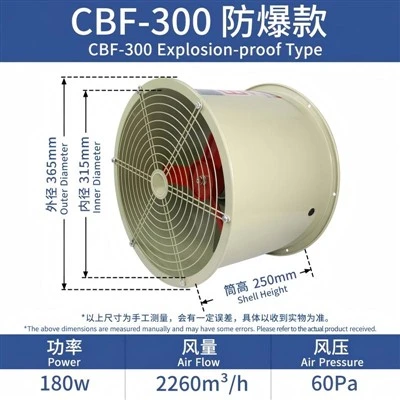
Whether you’re outfitting a new office, replacing a worn exhaust fan in your restaurant, or upgrading your home’s ventilation system, getting the right bearing is key. If you have more questions about the 11-62 fan’s components, how to pick the right size for your space, or anything else related to these units, feel free to reach out to our team to connect on a procurement or find the right fan for your needs. We’re here to help you get the most reliable, low-noise fan that fits your budget.
Explosion-proof Axial Fans References:
- ASHRAE Handbook – HVAC Systems and Equipment, American Society of Heating, Refrigerating and Air-Conditioning Engineers, 2020.
- Centrifugal Fan Design and Application, 2nd Edition, Industrial Press, 2018.
- Ball Bearing Technology for Industrial Fans, SKF Group Technical Publication, 2021.
- Low-Noise Fan Performance Standards, Air Movement and Control Association International, 2019.
Taizhou Yijia Electromechanical Co., Ltd.
Address: No. 47, Jinxing First District, Jintang Village, Jinqing Town, Luqiao District, Taizhou City, Zhejiang Province
E-mail: 826339968@qq.com
WebSite: https://www.yijiablower.com/
