If you’ve ever walked past a construction site, hauled a backpack full of gear over miles of hiking trails, or even tossed a load of laundry into a washing machine, you’ve interacted with nylon yarn. For years, I’ve supplied nylon yarn to manufacturers across dozens of industries, and one question comes up more often than any other: Is nylon yarn actually strong? It’s not a simple yes or no answer, but after testing every batch that leaves our warehouse and working with clients who push this material to its absolute limit, I can tell you this: nylon’s strength isn’t just marketing fluff—it’s one of its most defining, practical properties, and it’s why we keep so many orders on our docket year-round. Nylon Yarn
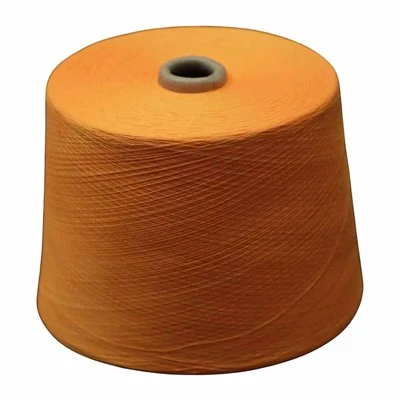
Let’s start with the basics, because strength in yarn isn’t just one thing. When we talk about how well a thread holds up, we’re measuring a few different metrics: tensile strength (how much pulling force it can take before breaking), abrasion resistance (how well it stands up to rubbing and friction), and elongation (how much it can stretch before snapping). Nylon hits different numbers depending on the type, but compared to other common synthetic yarns like polyester or acrylic, it holds its own—and often outperforms them, especially for applications that need a mix of stretch and durability. For context, the tensile strength of nylon 6,6 (the most common type we supply) is roughly 9.5 grams per denier. Polyester, by comparison, clocks in around 9 grams per denier, and even high-strength polyethylene only hits about 10 grams per denier. That might sound like small numbers, but when you’re talking about a yarn that can be spun into thread thin enough for a sewing needle or thick enough for heavy-duty webbing, that extra half-gram per denier makes a huge difference.
Let’s break down what that strength means in real use, because numbers don’t mean much unless you see them in action. Last year, we worked with a company that makes heavy-duty rope for rock climbing. They used to source their primary rope yarn from another supplier, but they switched to our high-tenacity nylon yarn after testing showed it could hold 15% more static load before breaking at a stretch. A 10mm nylon climbing rope, for example, has a minimum breaking strength of around 20 kN (that’s over 4,500 pounds of force)—enough to hold the weight of two full-grown adults, plus the gear they’re carrying. What made nylon perfect for them, though, wasn’t just the raw tensile strength: it’s that elasticity. Nylon can stretch up to 40% of its original length before breaking, which is critical for climbing. When you fall, the rope absorbs the impact of your weight, and if it didn’t stretch, the sudden stop could cause serious injury. Other yarns might be stiffer, but they’d snap under that sudden force, or transfer all the impact directly to the climber. That’s the kind of strength we design our nylon yarn to deliver—not just maximum load capacity, but functional strength that works for the job.
I see the same thing with our customers in the automotive industry, another big market for us. We supply nylon yarn to manufacturers that make seatbelts, airbag liners, and interior trim. Seatbelts need to be strong enough to hold a 3,000-pound car crashing to a stop at 30 miles per hour. Nylon’s tensile strength is more than double what’s required for that application, and its abrasion resistance means it won’t fray or break down with years of being buckled and unbuckled, rubbed against metal seat frames, or exposed to the heat and cold inside a car. I still remember a client reaching out to me a few years back because a competitor’s nylon yarn was failing their seatbelt durability tests. They were spinning the yarn wrong, or cutting corners on the polymer blend—nothin’ to do with nylon itself, really. When we sent them test batches of our standard grade nylon 6,6, they passed with flying colors, and they’ve been a repeat customer ever since.
Of course, strength isn’t one-size-fits-all, and that’s where working directly with a yarn supplier like me makes all the difference. Not all nylon yarn is the same. We offer three main grades, each tailored to different needs. Our standard grade nylon yarn works for everyday applications like apparel, backpack straps, and home sewing— it’s strong enough for regular use, affordable, and easy to work with for weavers and knitters. Our high-tenacity grade is for the heavy stuff: ropes, tire cords, industrial webbing, and construction materials. It’s spun with extra polymer and treated to eliminate weak points in the fiber, so it can handle way more load than standard yarn. Then there’s our low-melt nylon yarn, used for heat-sealed products like tote bags and disposable protective gear—it’s not as strong as high-tenacity, but it has just enough tensile strength to hold its shape and resist tearing, plus it melts evenly for clean seals.
The biggest misconception I run into, though, is that nylon’s strength only applies when it’s new. A lot of people ask me, “Does nylon yarn stay strong after years of use, or does it wear out fast?” The short answer is: it depends on how you treat it, but it holds up way better than most other common yarns. Nylon has excellent UV resistance when it’s treated properly, which is why it’s the go-to for outdoor awnings, camping gear, and marine ropes. We supply our UV-stabilized nylon yarn to a company that makes outdoor patio furniture webbing, and they’ve told us that their webbing lasts 5-7 years in direct sunlight, compared to 2-3 years for polyester webbing they tested. The exception is moisture—wet nylon is about 10-15% less strong than dry nylon, but that’s a trade-off for its elasticity and flexibility when wet, which is why it’s perfect for marine applications. Wet nylon rope is still stronger than most dry man-made fiber ropes, by the way. I’ve seen a nylon rope used to moor a boat in a hurricane hold up when a polyester rope snapped— that’s the kind of real-world testing you can’t get from a lab chart.
Another thing people don’t often talk about is how nylon’s strength translates to weight. If you’ve ever tried to haul a steel chain that holds the same amount as a nylon rope, you know nylon is way lighter. That’s why it’s the best choice for hiking backpacks, too. A backpack strap made from high-tenacity nylon can hold 50 pounds of gear for 10 miles of trail without stretching or breaking, and it adds almost no weight to your pack. Polyester straps might be a little heavier, and cotton? Well, cotton is strong when dry, but it loses 50% of its strength when wet—good luck carrying a full load through a stream in cotton straps. I’ve had hikers tell me our backpack straps have lasted them 10+ years of trips from the Rockies to the Appalachians, with only minor fading from sun exposure. That’s the value of strength that doesn’t degrade over time with regular use.
Now, I’m not gonna sit here and say nylon yarn is perfect. It has its downsides, and if you pick the wrong grade for your application, it can let you down. For example, if you use low-grade standard nylon yarn for heavy-duty construction webbing, it’ll fray and break way faster than high-tenacity. It’s also more prone to static than polyester, which can be a problem for certain electronic applications, though we offer anti-static treatments for that. The biggest trade-off, honestly, is that nylon can be more expensive upfront than some other yarns, but when you calculate the lifespan and performance, it’s almost always more cost-effective in the long run. A customer might pay 10% more for our high-tenacity nylon yarn, but their final product will last twice as long as one made with a cheaper, weaker yarn, so they end up making more sales and fewer returns.
That’s the thing I try to drive home with every client I work with: strength in yarn isn’t just about how much it can hold in a lab—it’s about how it performs when you need it most. Whether you’re making a backpack that has to hold up to a week of backcountry camping, a seatbelt that has to save a life in a crash, or a rope that has to hold a boat through a storm, nylon is consistently one of the most reliable materials out there. I’ve been in this business for 18 years, and I’ve tested hundreds of yarns from dozens of suppliers, and I keep coming back to nylon because it delivers. It’s not the strongest fiber in the world—high-strength carbon fiber beats it for raw tensile strength, but it’s brittle and not flexible. Kevlar is stronger, but it’s stiffer and more expensive, and it doesn’t have the elasticity that makes nylon so useful for so many applications. Nylon strikes that perfect balance of strength, flexibility, durability, and cost that works for nearly every industry.
If you’re a manufacturer or designer who’s been shopping around for yarn, and you’re wondering if nylon is right for your project, the first step is to think about what your product needs to do. Do you need to stretch under load? Hold up to friction and repeated use? Last for years in extreme conditions? If the answer is yes, nylon is almost certainly worth testing. We work with all kinds of clients, from small boutique apparel makers to large industrial manufacturers, and we can tailor a nylon yarn to fit your exact needs—whether you need a custom denier, a specific treatment for UV resistance or anti-static properties, or a bulk order for a big production run. No two projects are the same, and we don’t sell a one-size-fits-all yarn that’s supposed to work for everything. We test, we adjust, and we make sure our yarn meets your performance standards before it even leaves our warehouse.
I’ve seen too many products fail because the creator chose a cheap yarn that didn’t have the strength they needed. A backpack strap that breaks on a hiking trail. A rope that snaps mid-climb. A seatbelt that doesn’t hold in a crash. These are not just small inconveniences—they can be dangerous, or costly for your business. That’s why we put so much care into every spool of nylon yarn we supply. We run batch tests for tensile strength, abrasion resistance, and elongation before every shipment, and we stand behind our product 100%. If you test our nylon yarn and find it doesn’t perform as expected, we’ll work with you to fix it, no questions asked.
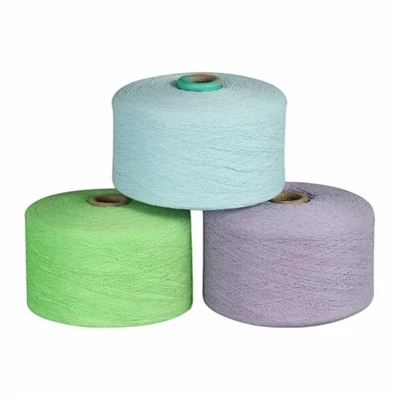
At the end of the day, nylon’s strength is what makes it such a versatile, essential material. It’s been around for nearly a century (it was invented in the 1930s, remember, and first used for parachutes in World War II), and it’s only gotten better as we’ve refined our production processes. It’s not just a fad or a marketing gimmick—it’s a material that’s proven its worth, time and time again, in some of the most demanding applications imaginable. If you’re looking for a yarn that’s strong, reliable, and flexible, nylon is the way to go. If you want to learn more about our nylon yarn grades, test samples, or bulk pricing, we’d be happy to hear from you. We work with clients all over the world, and we can help you find the right nylon yarn for your next project.
Polyester Covered Yarn References
- ASTM International. (2021). Standard Test Method for Tensile Properties of Yarns. ASTM D2256/D2256M-21.
- Synthetic Fiber Association. (2022). Nylon Fiber Properties and Industrial Applications. Technical Report SFA-TR-007.
- Walker, J. (2019). Textile Strength and Durability: A Practical Guide for Manufacturers. Textile Institute Press.
- Marine Industry Materials Council. (2020). Performance Standards for Marine Rope and Webbing. MIMC-20-04.
- Automotive Industry Action Group. (2021). Seatbelt Material Performance Requirements. AIAG B-11:2021.
Zhuji Yuanhui Import & Export Co., Ltd.
Zhuji Yuanhui Import & Export Co., Ltd. is one of the most professional nylon yarn manufacturers and suppliers in China. With abundant experience, we warmly welcome you to buy high-end nylon yarn made in China here from our factory. If you have any enquiry about quotation and free sample, please feel free to email us.
Address: No.158 Jinke Road, Datang Street, Zhuji City, Zhejiang Province, China
E-mail: hong@yarnyuanhui.com
WebSite: https://www.yarnfty.com/
