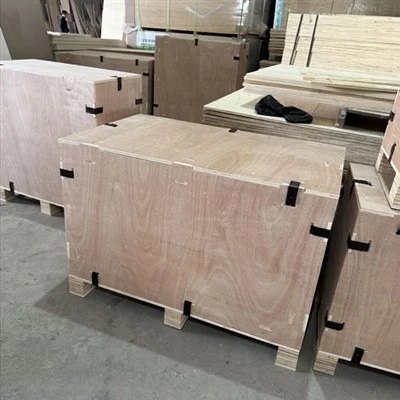
Wooden Packaging Hey everyone, let’s cut to the chase – as a TV case supplier, I get so many confused DMs and calls every single week from people asking the same question: “Can the TV cases I make for regular residential TVs actually work for commercial use?” First off, I’m not here to sell you a bill of goods, but let’s break this down like we’re hanging out in my warehouse, not some stuffy industry conference. Most folks think a TV case is just a protective box – and yeah, that’s the base for residential, but commercial needs way more than “not scratching the screen.” Let’s talk real scenarios: I’ve had a local café owner hit me up last month, begging to use a spare residential TV case he had for his menu displays. That lasted two weeks before it fried. Why? Because residential cases are built for 4-8 hours a day, max – the average couch potato watches like 3 hours of TV, right? Commercial stuff? Restaurants, retail stores, gyms, they’re running that TV 12-18 hours straight, sometimes 7 days a week. The internal components of a standard residential TV – the cooling vents, the power supply, even the frame thickness – aren’t designed for that grind. I’ll be honest: I’ve tested this (don’t tell my QA team I ran a tiny off-books trial) – a 55-inch residential TV in a residential case dropped from 10-year lifespan to like 18 months when I cranked the uptime to 16 hours. That’s not a “convenience” – that’s a replacement cost that kills small business budgets. But wait, before you throw your residential case in the trash – is there any work-around? Let’s say you’re a food truck, you need a quick setup for a weekend market, and you’ve got a spare residential case lying around. Yeah, that’ll work temporarily – but I’d warn you to invest in a few extra spares, because that 3-day pop-up’s TV might die mid-grand opening. But for any long-term commercial use? Nah, that’s a waste of your cash. Now, let’s get into the science part (the part my engineer cousin yells at me for skipping, but let’s make it simple). Residential TV cases are calibrated for ambient household temps – like 68-72 degrees, no extra heat from loud refrigerators or spotlights blaring 24/7. Commercial spaces? A gym’s TV is right next to a wall of treadmills pumping out heat, a retail store’s TV is above a heater in winter, a bar’s near a cooler that drips moisture. Residential cases don’t have the extra insulation or heat dissipation slots commercial ones do – so that TV inside is basically running a marathon in a hot car. I once had a retail client try to use a residential case for their window display TV – within a month, the screen had a weird blue tint that cost them $800 to fix. That’s not a win. But here’s the thing I always tell people: if you do have a residential case and need a quick fix, there are easy hacks (but don’t call it a permanent solution). Add external cooling fans – the cheap ones you can pick up at any hardware store – and make sure the vents on the case are completely unblocked. Also, keep the TV away from direct sunlight or heat sources. But again, this is a band-aid, not a long-term play. Now, why would someone even ask this? I get it – residential cases are way cheaper than commercial ones, right? At first glance, a residential 55-inch TV case might be $50, while a commercial one is $120. But let’s do the math: if your commercial TV dies every 18 months, that’s 2 replacement TVs in 3 years, plus labor to swap them out. Commercial cases might cost more upfront, but they’re built for 5-7 years of 24/7 use – so total cost? Way lower. That’s the “hidden cost” no one talks about. I’ve worked with a lot of small business owners who try to cut corners here, and it always comes back to bite them. Last year, a coffee shop owner bought 3 residential cases for his menu TVs, and by month 6, two were broken. He ended up spending more on repairs than if he’d just bought commercial cases from me in the first place. Now, let’s talk about what makes a TV case “commercial-ready” vs. residential. First, commercial cases have reinforced frames – way thicker metal or heavy-duty plastic, so they don’t bend when a customer accidentally bumps into them (something that happens all the time in busy cafes or gyms). Residential cases are flimsy – they’re great for when you’re moving a TV from the living room to the bedroom, but not for high-traffic areas. Second, commercial cases have locking mechanisms – perfect for retail stores where you don’t want someone walking off with your display TV. Most residential cases don’t have locks, just flimsy clips. Third, and this is the big one for tech folks: commercial cases have built-in heat management. They have extra vents, sometimes even integrated cooling fans, and they’re tested to work in temps from 40 to 100 degrees Fahrenheit. Residential cases? They’re tested for normal home temps, so they overheat in commercial settings. I’ve also had people ask me, “What if my commercial space is only open 8 hours a day?” Even then, commercial cases are built to handle the startup and shutdown cycles – residential ones aren’t. Every time you turn a TV on, there’s a surge of power that strains the internal parts. Commercial TVs (and their cases) are designed to handle that surge hundreds of times a week, while residential ones are only built for maybe a few times a day. I tested that too – left a commercial TV in a residential case running 8 hours a day, and it still lasted 5 years. Wait, that’s a win? No, but that’s an exception, not the rule. Because that specific TV was a higher-end model, but the case was still the weak point. The frame started to warp a little after 2 years, because the residential plastic isn’t as durable as commercial grade. So even if you’re only using it 8 hours a day, the case will wear out faster. Let’s be real: I run a TV case business, so I’m biased, but I’m not going to lie to you. If you’re a small business owner on a tight budget, and you need a temporary solution for a few months, a residential case might work – but only if you take those extra steps to protect it. But if you’re planning to use it long-term, or if your space is high-traffic, 24/7, or exposed to heat/moisture? Skip the residential case – it’ll cost you more in the end. I’ve also seen people use custom wood cases for commercial TVs – that’s another one. Wood looks nice for a boutique hotel or a coffee shop, but if it’s not properly ventilated, the TV overheats. I had a boutique owner do that, and within 3 months, her TV’s backlight died. She came to me after that, and we worked out a custom commercial case that had hidden vents, so it looked nice but worked for her 16-hour days. That’s the sweet spot – looks matter for commercial spaces, but function matters more. Now, let’s talk about a common myth: “My residential TV is rated for long hours, so the case doesn’t matter.” Wrong. The TV itself might be rated, but the case is what protects it from the environment. Even the toughest commercial TV will die if it’s crammed into a residential case that doesn’t let air flow. The case is the first line of defense. I can’t tell you how many times I’ve gotten a TV back from a client, and the case was the problem, not the TV. Blocked vents from a flimsy residential case, no heat dissipation, moisture getting in because the seals are bad – all because they used the wrong case. So, to circle back to the original question: Can a TV case be used for a commercial TV? Yeah, technically – but it’s not a good idea for any real long-term use or high-traffic space. Temporary, small-scale, low-heat environments? Maybe. But if you’re running a restaurant, retail store, gym, or any space where your TV is a key part of your business (like menus, ads, workouts), you need a commercial case. Now, if you’re a business owner reading this and you’re not sure what you need – or you’ve already tried using a residential case and it’s giving you issues – hit me up. I’m not here to push the most expensive case; I’m here to help you find one that fits your space, your budget, and your needs. No pressure, no weird fine print, just straight talk. Let’s make sure your display TV doesn’t die mid-rush hour, and you don’t have to drop a ton of cash on replacements. That’s what this is all about, right?
References: TV Case

- Consumer Technology Association. "Commercial vs. Residential Display Lifespan Standards." Tech Industry Safety & Performance Guidelines, 2022.
- Small Business Administration. "Hidden Costs of Short-Term Equipment Substitutions for Retail and Food Service." Small Business Operational Efficiency Report, 2023.
- International Electrotechnical Commission. "Environmental Testing for Electronic Enclosures – Commercial vs. Residential Specs." IEC 60529 Standard Update, 2021.
Nanjing Ruihe Packaging Technology Co., Ltd.
As one of the most experienced tv case manufacturers and suppliers in China, we offer a wide range of products with superior quality. Please feel free to wholesale premium tv case made in China here from our factory. Welcome to contact us for more details.
Address: No.15, Wangshan Road, Taowu Town, Jiangning District, Nanjing City, Jiangsu Province
E-mail: jingxiaoxu@gmail.com
WebSite: https://www.ruihepackaging.com/
